
Why Choose Us?
Reliable Product Quality
Since its establishment in 1994, it has been the constant pursuit of the company to produce the floor mat products with superior performance and environmental protection.
Professional Technical Team
ALL MATS is dedicated to being an expert in solving various ground problems. From anti fatigue mats for solving standing fatigue, to door mats for maintaining indoor cleanliness, and to sports mats for quietness and cushioning.
Wide Product Range
Along the way, ALL MATS concentrates on manufacturing. At present, it has 412 product patents, and its products are sold to 62 countries and regions.
Excellent Customer Service
We offer excellent customer service, including after-sales service and technical support, to ensure that their customers are satisfied.
What is Sports Mat?
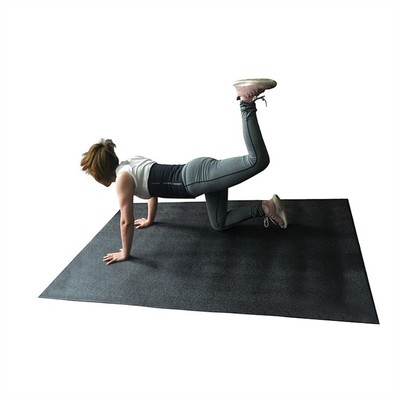
A sports mat is pretty much as it sounds. It's a mat made to facilitate exercise. Generally speaking, they are made of absorbent materials to soften impacts, reduce noise, and provide comfort to those who would otherwise be working out on hard floors or scratchy carpets. Their use in many settings is essential to avoid potential injury from impacts caused by movements such as jumping or lunging. They also protect the floor underneath from damage caused by training shoes, which often leave unsightly marks on typical home floor surfaces such as wood or carpet.
-

TPE Fitness Yoga mat
High-quality TPE materialDouble-layer design with anti-slip textureCompact and feather-light designPersonalize your gearMaterial:TPESize: 61x183cm/80x183cmThickness: 6mm/10mm/15mm/20mmColor: Add to Inquiry -
Eco-Friendly Yoga Mat With Bamboo Powder
Eco-Friendly Enhancements/Greener ChoiceNatural Comfort & PerformanceHealth-Conscious ChoiceUnique Appeal for BrandingBalanced FunctionalityMaterial:PVC+Bamboo PowderSize: 61x183cmThickness: Add to Inquiry -
Jump Rope Mat/Rope Skipping Mat
Vibration Dampening & Noise Reduction – Skip in peace, anytime, anywhere.Double-sided Foam Cushioning – Provides gentle support for joints, making workouts effortless.Rigid Center Zone – Durable Add to Inquiry -
Training Mat
Eco-Friendly & Safe—Made with non-toxic, odor-free materials for peace of mind.Antibacterial Protection—Special composition extends product lifespan.Ultra-Secure Grip—Double-sided non-slip Add to Inquiry -
Equipment Mat
Stabilizes your machines on carpets and slippery surfaces. Dampens vibrations and muffles noise. Protects your flooring against marking and debris from fitness equipment. Prolongs the life of your Add to Inquiry -
Pilates Mat
Ergonomic Support: High-density foam molds to your body for optimal comfort.Safety First: Dual-layer anti-slip technology for stability.Aesthetic Appeal: Eye-catching designs that inspire your Add to Inquiry -
Interlock Gym Mat
Intended for both indoor and outdoor use construction for durability and strength thick tile absorbs thrustful impact Add to Inquiry -
PVC Yoga Mat
High-density breathable foam delivers excellent cushioning and resilience.Durable leather-textured surface helps prevent slipping.Cross-embossed backing increases traction between the mat and the Add to Inquiry -
High-Intensity Traning Exercise Mat
Premium PVC Construction – Durable, long-lasting, and easy to clean.High-Density, Non-Slip Surface – Ensures safety and stability for intense workouts.Perfect Balance of Toughness & Comfort – Add to Inquiry


Advantages of Sports Mat
Controls Temperature and Prevents Bacteria
The sports mat is helpful in maintaining body temperature and in this way it will give you the benefit of keeping your body warm in your workout sessions. Since a continuous workout or exercise produces a lot of sweat, therefore in such a case, an antibacterial yoga mat provides good benefits to your skin and body, thereby reducing the risk of an infection or a disease.
Helps In Body Alignment
Most people have encountered body pains and injuries due to their improper body balance. With an sports mat, one can easily maintain a good posture as its hard surface texture provides a good grip in maintaining a perfect body balance. Having a thick mat adds more benefit as it sometimes becomes quite heavy and bulky and sticks to the ground. This provides stiffness and helps in controlling the unintentional movement. It also provides good support for those yoga positions that require you to lie down by creating the correct posture for the spinal cord and the neck. This provides comfort and reduces pain.
Helps In Maintaining Space
Whether it is a commercial gym or a home gym, an sports mat helps in maintaining an orderly space within a specific area and even becomes a ritual for some as they roll out their sports mat, marking a transition into a more sacred experience and personalized space. It also adds more comfort to the body where the bones protrude, such as knees and hips. This makes it easier for individuals to concentrate on the pose and not be distracted by discomfort or pain.
Provides A Good Cushion
One of the major benefits of an sports mat is that it provides a good cushion. This is very important for people who are fond of an active workout that involves jumping around, jogging, or even Zumba. It is also very helpful in exercises that usually involve rolling over the toes. A little cushion can also be nice while just sitting or lying down if you are on a hard surface. They can also provide some insulation if the surface you’re practicing on is very cold.
Easily Portable
An sports mat is a piece of light-weighted equipment that can be easily carried anywhere. It only requires you to roll it and keep it safe, away from dirt and moisture. The best part about it is that those people who often like to travel outside can take their sports mat with themselves without letting their fitness routine get distributed. All you need is to roll it down, and there you go.
Types of Sports Mat
01/
Pilates Mats
Pilates mats are similar to yoga mats, though they're often longer and thicker. Pilates mats are made with closed-cell construction, usually from TPE (Thermal Plastic Elastomer). Pilates mats are firm and should offer at least half an inch of padding. Unlike yoga mats, Pilates mats aren't very sticky, and you should be able to wipe them clean easily after use.
02/
Fitness Mats
Fitness mats are thick and large. They're generally at least half an inch thick and about five feet long. They're used for crunches and stretching exercises, or any other general exercise you prefer; They can absorb some amount of impact shock and provide cushioning between you and the floor during general exercise. They're made from closed cell PVC and usually also have an easy to clean vinyl cover.
03/
Yoga Mats
Yoga mats are thinner than Pilates mats, since they're intended for lower impact exercises. Yoga mats can be manufactured from a variety of different materials, Yoga mats are sticky and capable of clinging firmly to a hard floor surface. They're designed to provide cushioning for yoga exercises and to keep the yoga practitioner from slipping and sustaining injury. Yoga mats are easy to clean with soap and water.
04/
Professional Fitness Mats
Professional fitness exercise mats may be one or two inches thick, and are used in gymnastics and other professional sports scenarios, since they're thick enough to absorb almost any shock that might damage the knees, ankles, neck or spine. These mats are large and bulky and even folding professional mats are difficult to store. They're usually present in gyms and fitness classes. They can be made either from standard or extra dense foam, and are usually protected by an easy to clean vinyl cover.
05/
Foam Mats
Foam mats are usually two feet square, with interlocking edges, and they're about five inches thick. These mats are used to provide cushioning in martial arts classes. They're also a good choice for those who perform high intensity training exercises. The thickness of these foam mats absorbs impact shock and makes high intensity training easier and less harmful to the joints.
06/
Floor Protectors
Floor protector exercise mats are about a quarter of an inch thick and can be over eight feet long and three feet wide. You don't get down on these mats to perform exercises; Instead, you put them under your fitness equipment to protect the floor from damage. They should be nonslip to keep your fitness equipment steady and stable while you're using it.
Material of Sports Mat
PVC
PVC foam is the name of a chemical raw material. Before being foamed, it will not be soft, nor can it play the role of anti-skid and cushioning. Only after foaming can products such as yoga mats and anti-slip mats be produced. The advantage is that the PVC material is affordable, the surface is rough and non-slip, the texture is hard and durable, it can be bought everywhere, and the price is affordable. The disadvantages are poor elasticity, easy deformation, and odor.There is also an upgraded version of this material, which is called high-density PVC for the time being. In addition to the advantages of PVC, the resilience and service life have been significantly improved. It can withstand high-intensity training and is wear-resistant without deformation. The current professional sports mats are made of this material, but the price is relatively high, such as IKU.

NBR
It is a kind of rubber foamed material, an oil-resistant rubber product of nitrile rubber, referred to as NBR. The advantage is that this material has good oil resistance, high wear resistance, average heat resistance, is lightweight, has low density, and is cheap enough. The new pad also has a slightly peculiar smell, but its disadvantages are easy to collapse, general slip resistance, inferior insulation performance, and slightly lower elasticity.
TPE
It is a high-end product for yoga mat products. Each mat is lighter than PVC foamed mats and is suitable for carrying out. This material is a recyclable and degradable environmentally friendly material, so the price is relatively expensive. The advantages are that it does not contain chlorides and metal elements, is soft and antistatic, has a strong grip, is light in weight and easy to carry, has excellent elasticity, and is very cost-effective. The disadvantage is that it is not resistant to high temperatures, and the anti-slip performance will be reduced after the sweat has adhered to the mat.
What Thickness of Sports Mats Do I Need?
Yoga and Pilates
For these low-impact activities that involve mostly floor-based exercises, a mat thickness of around 1/4 inch (6.35 mm) is typically sufficient. Thinner mats provide better stability and connection with the ground.
Bodyweight Exercises and Stretching
If you primarily engage in bodyweight exercises, stretching, or light aerobic activities, a mat thickness of 1/4 to 1/2 inch (6.35 to 12.7 mm) should provide adequate cushioning and comfort.
Weightlifting and Strength Training
For activities involving heavier weights or exercises with more impact, such as weightlifting, powerlifting, or high-intensity interval training (HIIT), thicker mats with more shock absorption are recommended. In this case, mats with a thickness of 1/2 to 3/4 inch (12.7 to 19.05 mm) or even thicker can help reduce the impact on your joints.
Martial Arts and High-Impact Activities
If you practice martial arts, high-impact exercises, or require extra protection for falls and throws, thicker mats are essential. Mats with a thickness of 3/4 inch (19.05 mm) to 1 inch (25.4 mm) or more are commonly used in these scenarios.
Difference Between Yoga Mat and Sports Mat
Key Material Differences: What Sets Them Apart?
Yoga mats can be made of several types of material. Plastic materials such as PVC (polyvinyl chloride) and TPE (thermoplastic elastomer) are often used in their construction. Some yoga enthusiasts invest in eco-friendly yoga mats made of natural materials, like cotton or jute. Natural rubber yoga mats are also a popular choice amongst yogis.
Sports mats are also often made from PVC and TPE, but many makers use other materials, such as NBR (nitrile butadiene rubber.)
Thickness And Support: Sports Mat Vs. Yoga Mat
●Sports mat Thickness: Generally, an sports mat is built to withstand more intense, higher-impact workouts than a yoga mat. Because of this, sports mats are typically thicker than yoga mats. However, there is a wide range of thickness levels for sports mats. Some athletes prefer a medium build (5-7mm), while others want a thicker mat. “Thick mats” encompass a large range of sizes, from 8mm-5cm, or even thicker!
●Yoga Mat Thickness: Typically, yoga mats come in a thinner range than most sports mats and are commonly about 5 or 6mm thick. The thinness helps athletes feel the floor beneath them and can facilitate better stability and fluid movement. While most yoga mats are thin, thick ones are also available and often used in specific practices, like restorative yoga. They are also a good option for therapeutic purposes and helping athletes with pain.
Traction And Stability: Comparing Surface Features
Some workouts require more traction and stability from a workout mat than others. When it comes to yoga, this is particularly important. After all, yoga stretches require a fair amount of balance and grip to perform successfully and safely. Without a good, grippy surface, some mats can become sweaty and may cause athletes to lose balance or slip, especially when practicing yoga. Nobody wants that to happen! This is why some of our favorite yoga mat materials are made of rubber or TPE— they are less likely to slip and slide, even if your workout has you pouring sweat. However, plenty of PVC or eco yoga mats can also provide good grip and were designed with that intention. If you are currently shopping for a yoga mat with stability and traction in mind, we recommend searching for a brand that emphasizes grip.
While balance may often be associated with practices like yoga, it is a necessary component of many types of exercise. That’s why grip and stability are important for general sports mats and yoga mats. A well-textured sports mat with good stability and traction will help allow athletes to crush everything from planks to push-ups without worrying about injury.
The Considerations for Buying Sports Mat
Size
Are you planning to do yoga or core exercises while lying flat on the mat or do you work out standing up? How much floor space do you have to place your new mat? These are all questions to consider before you purchase your new sports mat. If you live in a studio or are low on space and need something that can be stored easily, pick a regular 68 to 72-inch (around 5.6-feet) mat. If you’ve got a dedicated home gym and want a large multifunctional mat that can even hold your equipment, choose one of our ultra-wide options.
Material
Sports mats can be made out of PVC, rubber, foam and even cloth. Rubber mats are more likely to stay in place but might not be as plush as a PVC mat. They’re both great though, sot it ultimately comes down to what you plan on using this mat for. For high-intensity workouts, it might be important to have a workout mat that stays in place, likely made out of rubber, for instance.
Thickness
The best sports mats can be as thin as 0.125 inches (3.175 mm) or as thick as an inch. Most sports mats are usually 0.5 inches thick. It all depends on how much support you think your joints need. I personally use a one-inch-thick fitness mat to support my lower back during core exercises but if you have a floor that’s usually carpeted or a dedicated gym floor, you can buy a mat that’s a lot thinner — even one that’s 0.125 inches thick.
Durability
PVC mats are extremely durable and generally easy to clean. They also have the most ‘give’ and can last a long time. But, they might not be the best option if you get very sweaty during your workouts. In that case, you’ll want a rubber or jute fitness mat. They’re more earth-friendly, and are also exceptionally durable, as long as you regularly clean them. All in all, a well-used sports mat should last you a year on average.
How to Use an Sports Mat for a Full-Body Workout
Plank
Start in a plank position with your hands on the mat and your feet shoulder-width apart. Engage your core and hold this position for 30 seconds to 1 minute, depending on your fitness level. Make sure to keep your body straight and avoid letting your hips sag or lift too high. Planks are a great exercise for strengthening the core, shoulders, and upper back.
Mountain Climbers
Start in a plank position with your hands on the mat and your feet shoulder-width apart. Bring your right knee towards your chest, then return to the starting position. Next, bring your left knee towards your chest, then return to the starting position. Continue alternating legs for 30 seconds to 1 minute, depending on your fitness level. Mountain climbers are a great cardio exercise that also works the core, shoulders, and upper back.
Push-ups
Start in a plank position with your hands on the mat and your feet shoulder-width apart. Lower your body down until your chest touches the mat, then push back up to the starting position. Aim for 8-12 reps, depending on your fitness level. Push-ups are a classic exercise for strengthening the chest, triceps, and shoulders. You can also modify this exercise by performing it on your knees instead of your toes to make it easier.
Sit-ups
Lie on your back with your knees bent and your feet flat on the mat. Place your hands behind your head, then lift your upper body towards your knees until you’re sitting upright. Slowly lower your upper body back down to the starting position. Aim for 8-12 reps, depending on your fitness level. Sit-ups are a great exercise for strengthening the core muscles, including the abs and obliques.
Russian Twists
Sit on the mat with your knees bent and your feet flat on the floor. Lean back slightly and lift your feet off the ground, engaging your core. Place your hands on the mat beside your hips, then twist your upper body to the right, bringing your left elbow towards your right knee. Return to the starting position, then twist to the left, bringing your right elbow towards your left knee. Continue alternating sides for 30 seconds to 1 minute, depending on your fitness level. Russian twists are a great exercise for strengthening the oblique muscles and improving spinal rotation.
Tips to Keep Your Sports Mats in Top Condition
Regular Sweeping and Vacuuming
Regularly sweep or vacuum the sports mats to remove loose dirt, dust, and debris. This will prevent the accumulation of dirt and keep the mats clean.
Spot Cleaning
For immediate spills or stains, spot clean the affected area using a mild detergent or a sports mat cleaning solution. Gently scrub the stain with a soft brush or cloth and rinse thoroughly. Avoid using harsh chemicals or abrasive cleaning tools that can damage the mats.
Deep Cleaning
Perform a deep cleaning of the sports mats at least once a month, or more frequently if they are heavily used. Depending on the type of mats, you can either machine wash them or use a pressure washer. Follow the manufacturer’s instructions for washing and drying to prevent damage.
Disinfecting
Regularly disinfecting sports mats is essential to maintain hygiene and prevent the spread of bacteria and viruses. Use a sports mat disinfectant spray or a mixture of water and vinegar to sanitize the mats. Allow the disinfectant to sit for a few minutes before wiping it off or letting it air dry.
Drying
Properly drying the sports mats after cleaning is crucial to prevent the growth of mold and mildew. Hang or lay the mats in a well-ventilated area to air dry completely before placing them back in the gym. Avoid folding or storing the mats when they are still damp.
Rotation
To ensure even wear and tear, regularly rotate the sports mats. This will distribute the pressure and extend the lifespan of the mats. Additionally, rotating the mats allows you to clean and maintain the underlying floor, preventing the accumulation of dirt and moisture.
Regular Inspections
Regularly inspect the sports mats for any signs of damage, such as tears, cracks, or loose edges. Repair or replace damaged mats promptly to avoid accidents and maintain a safe exercise environment.
Educate Users
Educate gym members and staff about the importance of proper mat maintenance and cleanliness. Encourage them to use towels and clean footwear on the mats, and to report any spills or damages immediately.
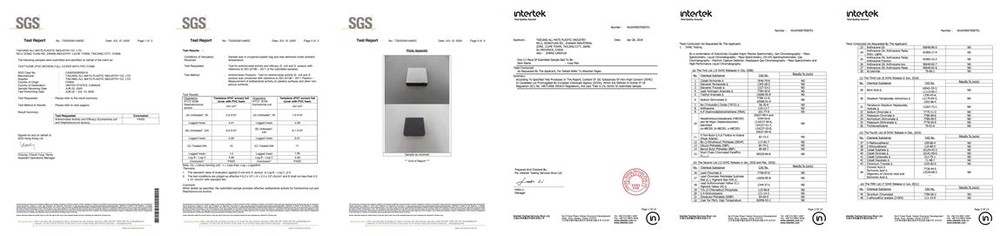
Our Certifications


Our Factory
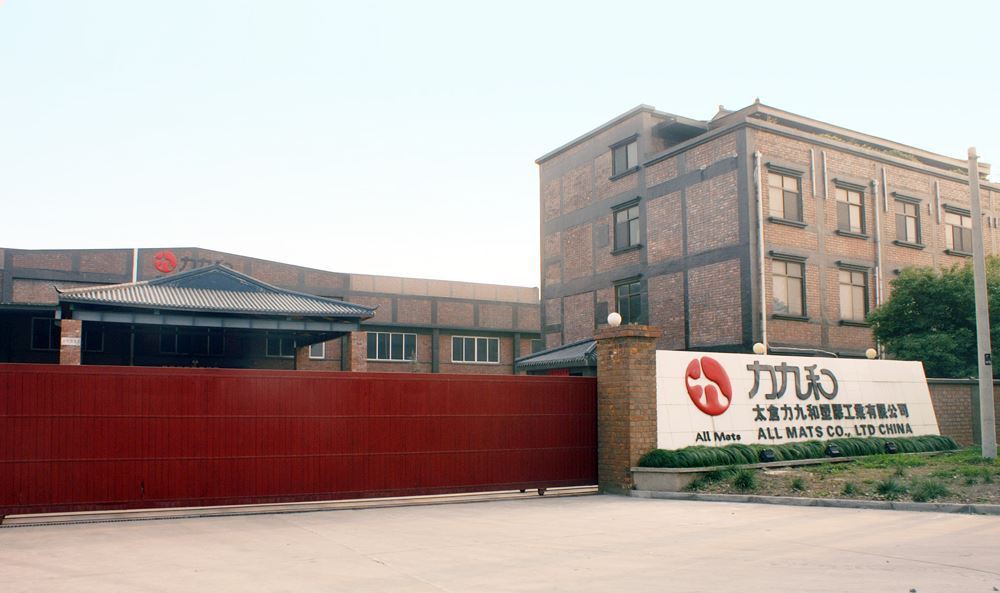
ALL MATS is dedicated to being an expert in solving various ground problems. Since its establishment in 1994, it has been the constant pursuit of the company to produce the floor mat products with superior performance and environmental protection. From anti fatigue mats for solving standing fatigue, to door mats for maintaining indoor cleanliness, and to sports mats for quietness and cushioning, all mats have the yearning for a better life.
Ultimate FAQ Guide to Sports Mat
We're well-known as one of the leading sports mat manufacturers and suppliers in China. Please feel free to buy customized sports mat at competitive price from our factory. For pricelist and quotation, contact us now.
