
Why Choose Us?
Reliable Product Quality
Since its establishment in 1994, it has been the constant pursuit of the company to produce the floor mat products with superior performance and environmental protection.
Professional Technical Team
ALL MATS is dedicated to being an expert in solving various ground problems. From anti fatigue mats for solving standing fatigue, to door mats for maintaining indoor cleanliness, and to sports mats for quietness and cushioning.
Wide Product Range
Along the way, ALL MATS concentrates on manufacturing. At present, it has 412 product patents, and its products are sold to 62 countries and regions.
Excellent Customer Service
We offer excellent customer service, including after-sales service and technical support, to ensure that their customers are satisfied.
What is Entrance Mat?
Entrance mat is a type of mat that is designed to be placed at the entrance of a building or other space. The purpose of entrance mat is to provide a surface that people can walk on when entering the space, and to remove dirt, debris, and moisture from their shoes. This helps to keep the interior of the building clean and safe, and can also prevent slips and falls. Entrance mat is commonly used in commercial and industrial buildings, as well as in residential homes.
-

Spaghetti Mat Heavy Duty with Mesh Backing
Rapid drainage with exceptional debris-trapping capability.. Effectively scrapes mud, dirt, snow, and water from shoes.. Anti-slip surface ensures comfortable walking.. Add to Inquiry -
Spaghetti Mat Heavy Duty with Solid Backing
Suitable for indoor, outdoor, and recessed well installations in high-traffic areas.. Superior dirt removal and concealment capabilities.. Durable vinyl loops scrape, trap, and conceal dirt/moisture, Add to Inquiry -
Spaghetti Mat Heavy Duty with Open Backing
Advanced Debris Capture: Featuring looped rubber construction, this mat effectively traps moisture, mud, and debris-preventing them from entering your home, RV, or campsite.. Add to Inquiry -
Spaghetti Mat Durable Mat with Solid Backing
Quick drainage with excellent dirt removal capability.. Effectively scrapes off mud, dirt, snow, and water from shoes.. Anti-slip design for softer and more comfortable walking.. Add to Inquiry -
Spaghetti Mat Durable Mat with Meshing Backing
• Durable, anti-slip coated mesh backing offers safety, stability, and extended life. • UV, fire and chemical resistant to withstand a variety of environmental conditions. Add to Inquiry -
Spaghetti Mat Durable with Open Backing
Superior Drainage & Dirt Removal. All-Weather Cleaning Efficiency. Safety & Comfort. Industrial-Grade Durability. Low-Maintenance Design. Add to Inquiry -
Waterhog Classic Mat
a. Manufactured using 100% recycled materials. b. Raised square pattern superbly removes dirt and moisture. Add to Inquiry -
Waterhog Premier Mat
Extra-coarse polypropylene fibers provide aggressive scraping action.. Distinctive hobnail pattern withstands tough indoor/outdoor conditions, retaining large amounts of water, dirt, and snow.. Add to Inquiry -
Waterhog Eco Elite Mat
Product: Fish Bone. Material: 70%PP+30%PET with Vinyl backing. Color: Dark Grey, Red. Add to Inquiry -
Waterhog Scrape Rib Mat
Product: Scrape Rib. Material: PET with vinyl backing. Color: Light Grey, Dark Grey, Black, Brown, Blue, Red, Dark Red etc.. Add to Inquiry -
Waterhog Diamond Mat
Diamond texture equip the carpet with great water storage and dirt scraper.. Polyester non-woven fabrics absorb the moisture or water from shoes all round.. Add to Inquiry -
Entrance X-grip
Scrape dirt and prevent slip. Suitable to use as both indoor and out door entrance scraper mat.. Raised nodules effectively scrape dirt and prevent slip.. Material: Vinyl. Tile size: 30x45cm. Height: Add to Inquiry


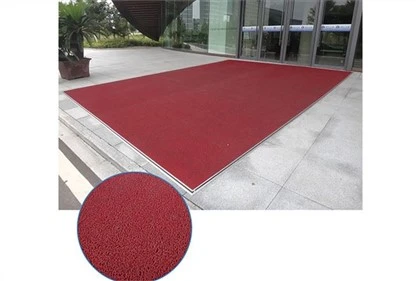


Advantages of Entrance Mat
Defends your Carpets Against Mud, Dirt and Water
Of course, one of the clearest benefits of placing entrance mats at each door in your home is to encourage your family and visitors to wipe their feet and prevent mud and dirt being tracked into your home. As much as 75% of the dirt and grime in carpet is tracked in on the bottom of shoes. While all kinds of foreign particles, dirt, dust and mud can collect on the bottom of shoes and be brought inside to carpet and tiled floors, entrance mats provide the first level of protection to dirt and dust getting into your home.
Protect Your Carpets From Germs and Contaminants
Dirt, dust and mud inside your home isn't just unsightly, it's also a potential source of germs, contaminants and disease causing particles. These germs and contaminants can become lodged within the fibers of your carpet or absorbed into the grout of your tiles and require thorough professional carpet cleaning or grout cleaning to remove. Entrance mats help to remove layers of dirt and grime from you shoes that otherwise could carry germs into your home.
Reduce Carpet Maintenance
Excess dirt and dust being brought into your home on visitor's shoes could mean that you need to vacuum, spot clean and deep clean your carpets, tiles or floorboards more frequently in order to create clean, safe and healthy conditions within your home. Professional carpet cleaning and tile cleaning is normally recommended twice per year, however failing to use entrance mats at your doors could boost the need for professional floor cleaning to as much as 4 times per year.
Safety
One of the greatest advantages of entrance mats in your home is increasing the safety of your home and diminishing the risk of slips and falls. Rainy wet weather outside can mean that water gets tracked into your home, and water combined with tiles or hardwood floors in your home can mean an increased risk of slips, trips, falls and injuries. Entrance mats help to collect water and mud before it enters your home, reducing your risk of falls and keeping your home clean and beautiful.
An Attractive Welcomewelcoming Doormat
Entrance mats can add a decorative touch to your home as well as providing added safety and cleanliness. An attractively designed entrance mat integrated with the style of your home complements your entrance way and provides the perfect welcome to your home.
Preserving Indoor Air Quality
With dirt, dust, chemicals, pesticides, and contaminants being tracked in on shoes and trapped in carpet and floor cracks, these particles can cause issues for indoor air quality. Dust, chemicals and contaminants can be stirred up during regular traffic or vacuuming, elevating levels of indoor pollution and causing issues for those with asthma, allergies and sensitivities. Entrance mats can help to catch these contaminants and prevent them affecting the air quality in your home.
Types of Entrance Mat
Indoor Entrance Mats
These mats are designed to trap dirt and moisture at the entrance of your home or business. They're usually made from rubber, vinyl, plastic or carpet and come in a range of colours and sizes to match any decor. Indoor entrance mats can be used outdoors as well however, they must be cleaned regularly to ensure that debris isn't tracked indoors.
Outdoor Rubber Mats
These mats are designed to withstand the elements, making them ideal for outdoor entryways. They are often made from a rubber material that is strong and durable yet soft enough to protect your feet from slipping or tripping on wet surfaces. Outdoor entrance mats also come in a variety of colours and designs to enhance the aesthetics of any exterior space.
Matwell Entrance Mats
Matwell entrance mats are designed for commercial settings where safety is key. They are usually made of rubber or metal and come in a variety of colours and designs to match any business's aesthetic. These can be placed inside entryways, hallways, elevators and other common areas to ensure that employees and guests don't slip or trip on wet surfaces.


Thin Entrance Mats
Thin entrance mats are ideal for small entryways or hallways where space is limited. They are made of thin yet durable material that can easily be placed in any area without taking up too much space. They also come in various colours and designs, making them perfect for any interior design.
Large Entrance Mats
As mentioned in the name, Large mats are ideal for larger outdoor entryways or hallways. They can be commercial door mats that are usually made from rubber, vinyl or plastic and come in a variety of sizes to fit any space. However, they can also be used for home use as and will provide superior coverage, trap dirt, debris and moisture that can be tracked indoors.
Underfloor Heating Entrance Mats
Underfloor heating mats are designed to fit underneath floor heating systems, such as radiant or hydronic systems. They are made from a durable material that can withstand heat without being damaged and come in a variety of sizes and colours, so they can be matched to any decor. This is also a high-quality entrance matting.
What Are the Common Surface Materials for Entrance Mats?
01/
Nylon
Nylon is a synthetic fibre and is very much regarded as the entrance matting materials, usually with a higher price point to reflect this. There are many types of nylon, such as Polyamide for example, which is a common material for heavy duty entrance matting. That is why it is popular for commercial areas such as shopping centre entrances or public travel, where high levels of footfall are normal.
02/
Coir – Entrance Mats Made From Coconut Fibre
Coir is the epitome of the classic door mat, which today has been overtaken by more modern materials for commercial entrance areas. It is a natural material derived from the husks of coconut shells, which being coarse to the touch gives coir its bristly 'brushing' properties. Coir does not have the quickest of drying properties and is prone to soiling.
03/
Polypropylene
Derived from a thermoplastic polymer, entrance matting with Polypropylene fibres, are very popular as the fibres give an effective scraping action due to their abrasive texture. This makes it an especially good performer when it comes to scraping dry dust. Entrance matting manufactured from Polypropylene fibres is generally durable and frequently used for ‘zoned' areas, or used in longer lengths as dirt-barrier runners in reception areas for maximum floor protection.
04/
Cotton
Another natural fibre, cotton has many advantages when used for doormats in indoor domestic situations. Rather like a towel, it soaks up moisture and is renowned for its absorbency and quick-drying properties. It is ideal for wet, oily, or grease carrying moisture but not so good for dry dust and dirt. Cotton pile has a tendency to flatten but can normally be washed which restores the material to its former self.
05/
Microfibre
Microfibre is a synthetic door mat material made from extremely fine individual fibres that are split to be even thinner than the human hair – usually 1.0 denier or smaller. Different fibres can be used to produce microfibre, but most commonly in entrance mats it is polypropylene and nylon (polyamide) yarn. The term ‘microfibre' is used to describe the yarn's fineness – there is microfibre and ultra microfibre.
06/
Natural Rubber / Nitrile Rubber Door Mats
Rubber (especially Nitrile Rubber) is suitable for heavy duty outdoor entrance areas. Unlike PVC, rubber doormats are not prone to cracking. When it comes to rubber door mats, there are many choices in design – some feature open holes, while others have a textured solid surface. Opened holed rubber door mats are effective dirt-scrapers and allow the debris to fall through the mat. Rubber door mats have good non-slip characteristics.
Importance of Entrance Mat Material
Entrance mat is an essential part of any building's entrance, as it helps to keep the interior clean and safe. When it comes to selecting materials for entrance mat, there are several important factors to consider, including durability, slip resistance, moisture absorption, and ease of maintenance.
One of the most important factors to consider when choosing materials for entrance mat is durability. Entrance mat is subjected to a lot of wear and tear, so it needs to be made from materials that can withstand heavy foot traffic and wheeled equipment. Materials such as aluminium, rubber, and nylon are popular choices because they are tough and durable.
Another important factor to consider is slip resistance. Entrance mat should have a non-slip surface to prevent slips and falls, especially when the mat is wet. Rubber and vinyl are popular choices for their slip-resistant properties, and many manufacturers add textured patterns to the surface of their mats to enhance their slip resistance.
Moisture absorption is another critical factor to consider when selecting materials for entrance mat. Moisture can cause slip hazards, as well as damage to interior surfaces. Mats made from materials such as polypropylene, nylon, and polyester are excellent at absorbing moisture and preventing it from being tracked inside.
Ease of maintenance is also important when choosing materials for entrance mat. Mats that are easy to clean and maintain will last longer and perform better over time. Rubber and vinyl mats can be easily cleaned with a damp cloth, while carpet mats can be vacuumed or steam cleaned.
It's important to consider the aesthetic appeal of entrance mat. Mats come in a variety of colours, patterns, and textures, allowing building owners to choose materials that complement their interior design.
How To Measure For Entrance Mat
Decide how much space you need the mat to cover. You can judge this by seeing how far dirt and debris is tracked into the building, as this will tell you how much coverage you need.
Measure the space, using a tape measure. You will need to know the length and width, in centimeters or millimeters. This can be slightly more difficult for wells and recesses, as mats are typically fitted wall to wall and are not always perfectly rectangular- but it’s still possible.
The company is a 'Member of China Interior Decoration Association', 'National Excellent Enterprise in Air Interior Decoration', and was rated as 'Top Ten Brands of Electric Curtains', with 7 product patents, and it is well-known in the industry.
Select your matting. Now that you know the measurements you need, you can easily pick between the mats that match your requirements or choose custom size mats if you need an exact fitting.
How Do I Maintain Entrance Mat?
Regularly Clean The Mat
Entrance mats should be regularly cleaned in order to remove dirt, debris, and moisture that has been trapped in the mat. This can be done using a vacuum, a broom, or a hose, depending on the type of mat and the amount of dirt and debris that has accumulated.
Remove Heavy Debris
In addition to regular cleaning, it is also important to periodically remove heavy debris from the mat, such as rocks, sticks, or other large objects that may be stuck in the mat. This can be done by hand or with a tool, such as a rake or a shovel.
Dry The Mat Thoroughly
After cleaning the mat, it is important to allow it to dry thoroughly in order to prevent mould or other growth from developing. This can be done by allowing the mat to air dry, or by using a towel or a mop to remove excess moisture.
Protect The Mat From The Elements
In outdoor spaces, it is important to protect the mat from the elements, such as sunlight, wind, and rain. This can be done by placing the mat in a covered area or by using a mat cover to protect it from the weather.
Repair Or Replace The Mat As Needed
Over time, entrance mats may become worn or damaged, and it may be necessary to repair or replace the mat in order to maintain its effectiveness. If a mat is heavily worn or damaged, it may be more cost-effective to replace it rather than trying to repair it.
What Are Some Common Uses For Entrance Mat?
● Protecting the interior of a building from dirt, debris, and moisture that can be tracked in on people's shoes
● Helping to prevent slips and falls by providing a safe, non-slip surface for people to walk on
● Enhancing the appearance of a space by providing a decorative or functional element at the entrance
● Helping to maintain the cleanliness and safety of a building by trapping dirt and moisture before it can spread throughout the space
● Providing a comfortable surface for people to walk on, which can help to reduce fatigue and discomfort

What Are The Key Features To Consider When Choosing Entrance Mat?
Size
Entrance mat is available in a range of sizes, so it is important to choose a mat that is the right size for the entrance of your building. A mat that is too small will not be effective at trapping dirt and moisture, while a mat that is too large may be difficult to use or may interfere with the flow of foot traffic.
Material
The material of the mat is also important, as different materials have different properties and are suitable for different applications. For example, rubber mats are often used in outdoor spaces or in areas with heavy foot traffic, while synthetic mats are often used in indoor spaces or in areas with medium foot traffic.
Surface Texture
The surface texture of the mat is also important, as it will determine how effectively the mat is able to remove dirt, debris, and moisture from shoes. A mat with a rough, scraper-like surface will be more effective at removing these substances than a mat with a smooth surface.
Absorption
The absorption of the mat is another important factor to consider, as it will determine how much moisture the mat is able to trap. A highly absorbent mat will be more effective at preventing moisture from spreading throughout the building than a mat with low absorption.
Durability
The durability of the mat is also important, as it will determine how long the mat will last and how well it will hold up to heavy use. A durable mat will be able to withstand frequent use and will not easily become worn or damaged.
Style
Finally, the style of the mat is also important, as it can help to enhance the appearance of the entrance of your building. Entrance mat is available in a variety of styles, so it is important to choose a mat that fits with the overall aesthetic of your space.
What Safety Considerations Should Be Taken Into Account When Using Entrance Mat?
Proper Installation
Entrance mat should be installed properly in order to ensure that it is effective at trapping dirt, debris, and moisture, and to prevent it from becoming a tripping hazard. The mat should be placed on a flat, level surface, and should be securely anchored to the floor to prevent it from shifting or moving.
Non-slip Surface
Entrance mat should have a non-slip surface in order to prevent slips and falls. Non-slip surfaces are particularly important in wet environments, or in areas where there is a risk of water or moisture on the floor.
Maintenance
Entrance mat should be regularly cleaned and maintained in order to ensure that it continues to effectively trap dirt, debris, and moisture, and to prevent it from becoming worn or damaged. Mats that are heavily worn or damaged may be a tripping hazard, and should be repaired or replaced as needed.
Proper Use
Entrance mat should be used properly in order to ensure that it is effective at trapping dirt, debris, and moisture, and to prevent it from becoming a tripping hazard. This means making sure that people walk on the mat when entering the space, and removing any heavy debris that may be stuck in the mat.
Safety Warnings
Some types of entrance mat may have safety warnings or instructions that should be followed in order to ensure safe use. For example, some mats may be flammable, or may have other safety hazards that should be considered. It is important to read and follow any safety warnings or instructions that are provided with the mat.
Production Process of Entrance Mat
Design
The first step in manufacturing entrance mats is designing the mat itself. This involves selecting the appropriate materials, deciding on the size and shape of the mat, and creating a prototype or mock-up of the design.
Material Selection
The choice of materials will depend on the mat’s purpose and location. Materials commonly used in entrance mats include rubber, vinyl, nylon, polyester, and aluminium.
Cutting And Shaping
Once the materials are selected, they are cut and shaped to the appropriate size and shape using cutting machines or hand tools.
Surface Treatment
Some entrance mats require additional surface treatments, such as embossing, printing, or flocking. These treatments can add texture or patterns to the mat’s surface, improving slip resistance or aesthetic appeal.
Bonding And Stitching
If the mat consists of multiple layers, such as a backing material and a surface material, these layers are bonded together using heat or adhesives. The edges of the mat may also be stitched or finished to prevent fraying.
Finishing
Once the mat is assembled, it may undergo additional finishing processes such as trimming, edging, or cleaning to ensure a smooth and consistent appearance.
Packaging And Distribution
The finished mats are packaged and distributed to retailers or end-users.
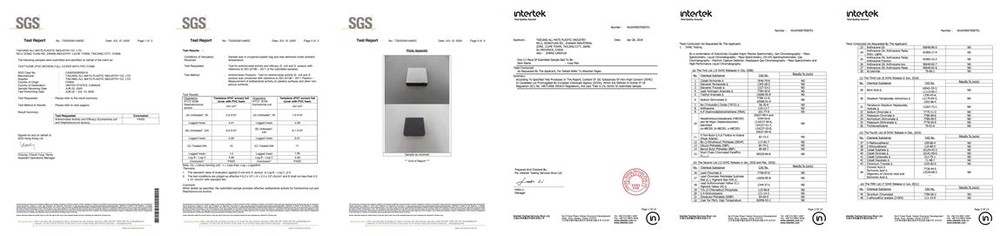
Our Certifications


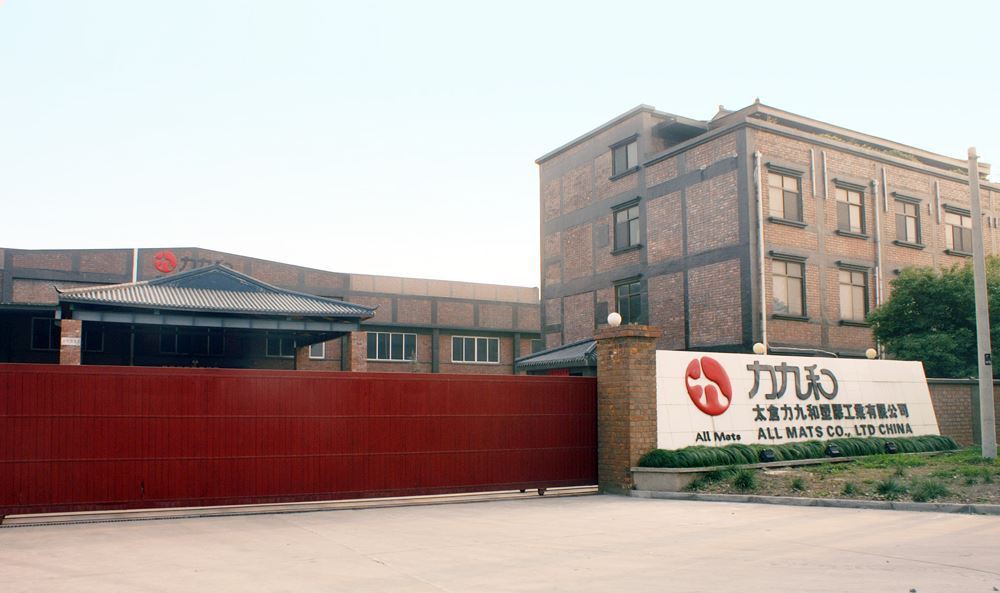
Our Factory
ALL MATS is dedicated to being an expert in solving various ground problems. Since its establishment in 1994, it has been the constant pursuit of the company to produce the floor mat products with superior performance and environmental protection. From anti fatigue mats for solving standing fatigue, to door mats for maintaining indoor cleanliness, and to sports mats for quietness and cushioning, all mats have the yearning for a better life.
Ultimate FAQ Guide to Entrance Mat
We're well-known as one of the leading entrance mat manufacturers and suppliers in China. Please feel free to buy customized entrance mat at competitive price from our factory. For pricelist and quotation, contact us now.
